A global community of allies, changemakers, leaders, and educators dedicated to a world where knowledge builds understanding, advocacy creates change, and queer neurodiverse communities thrive.
What is Queerodiversity?
Neurodiversity has changed how we understand differences in how people think, learn, communicate, process information, and experience the world. Rather than assuming there is one correct or typical way for a mind to function, the neurodiversity framework recognizes neurological differences as part of natural human variation and encourages greater attention to accessibility, support, environment, and belonging.
Queerodiversity builds on that conversation by looking at what happens when neurodivergence intersects with queer identity, lived experience, community, accessibility, relationships, and the systems people move through every day. At Queerodiverse, we use the term to describe the diversity of identities, minds, experiences, perspectives, and ways of being that emerge within and around queer and neurodivergent communities, recognizing that meaningful inclusion requires understanding and supporting the whole person rather than treating different parts of identity in isolation.
The Power of Inclusion
At Queerodiverse, we believe our communities can help shape better ways of working, learning, leading, and belonging. When workplaces, schools, healthcare settings, organizations, and community spaces are designed with queer and neurodivergent people in mind, they often become more flexible, accessible, communicative, and supportive for everyone. Inclusion is not only about removing barriers for particular groups; it is about creating environments that recognize human difference as a normal part of how people live, learn, connect, and contribute.
This article explores how queer and neurodivergent inclusion can strengthen psychological safety, accessibility, communication, education, leadership, and community participation. By designing spaces that make room for different identities, communication styles, sensory needs, learning preferences, and ways of engaging, organizations can create conditions where more people are able to participate fully, contribute meaningfully, and thrive.
Rethinking Care Through a Queerodiverse Lens
Neurodivergent and queer people often enter healthcare, counselling, education, and support systems that were not designed with their full identities, communication styles, sensory needs, or lived experiences in mind. When care focuses only on one part of a person, important context can be missed, and difference can too easily be misunderstood as dysfunction. Understanding the distinction between treating distress and trying to change identity is essential to creating care that is effective, affirming, respectful, and grounded in the needs of the whole person.
A Queerodiverse lens brings neurodiversity-affirming and queer-affirming approaches together by recognizing that identity, environment, accessibility, trauma, communication, and support needs can intersect in complex ways. This article explores what it means to support wellbeing without pathologizing difference, why affirming care still requires sound clinical judgment and informed practice, and how healthcare, counselling, education, and support systems can create better outcomes by respecting who people are while addressing the challenges they are actually experiencing.
Start a Queerodiverse Peer Support Group
Bring queer neurodivergent community to life where you are. Queerodiverse supports people who want to start approved peer support groups in their local communities, workplaces, campuses, or online. These groups are designed to create accessible, affirming spaces where queer neurodivergent people can connect, share experiences, build relationships, and find belonging without having to separate or explain different parts of who they are.
Prospective facilitators complete a required two-hour orientation with Queerodiverse staff to learn about the organization, the principles of peer support, accessibility, boundaries, group facilitation, and how to create inclusive spaces. Approved facilitators also join monthly check-in meetings for ongoing support, shared learning, and troubleshooting, and approved groups can be listed on Queerodiverse.com so people looking for community can find them.
The Queerodiverse 1000 Voices Project
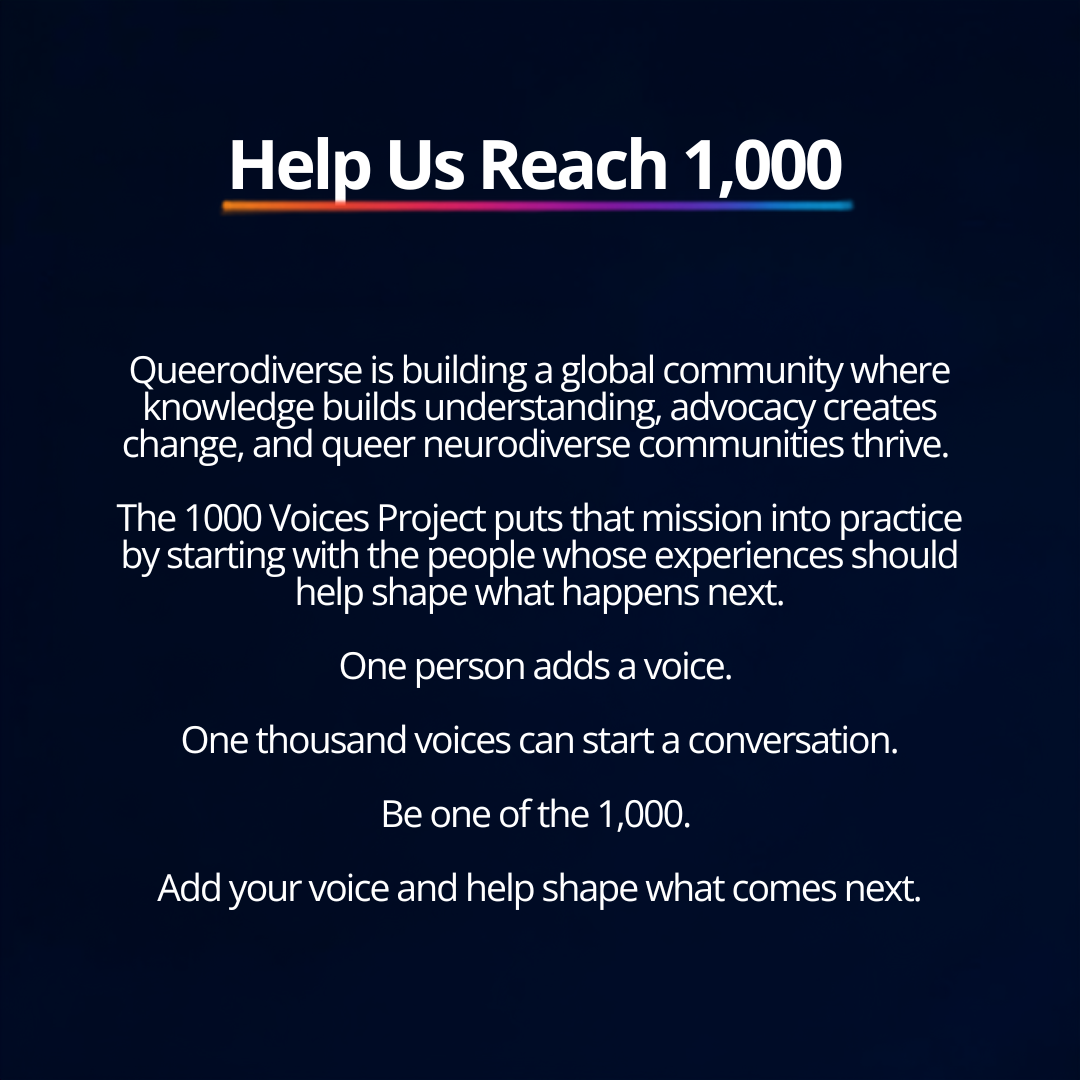
Queerodiverse is just getting started. Our next chapter is focused on building the foundation for a strong, sustainable global organization that can turn community knowledge into education, advocacy, resources, and meaningful change.
Over the coming months, we will be forming Queerodiverse’s first Board of Directors and working toward registered charitable status in Canada. At the same time, we will continue developing practical resources, educational materials, professional training, and tools that help workplaces, schools, healthcare providers, community organizations, leaders, and allies create spaces where queer neurodivergent people can thrive.
We have also launched the Queerodiverse 1000 Voices Project, our first major global community initiative. Our goal is to hear from 1,000 queer neurodivergent people across at least 25 countries about belonging, accessibility, inclusion, and what needs to change. What we hear will help shape the resources we create, the issues we advocate for, and the direction Queerodiverse takes next.
We’re building the organization while building the movement — and we want our communities to help shape both.